.svg)
.svg)
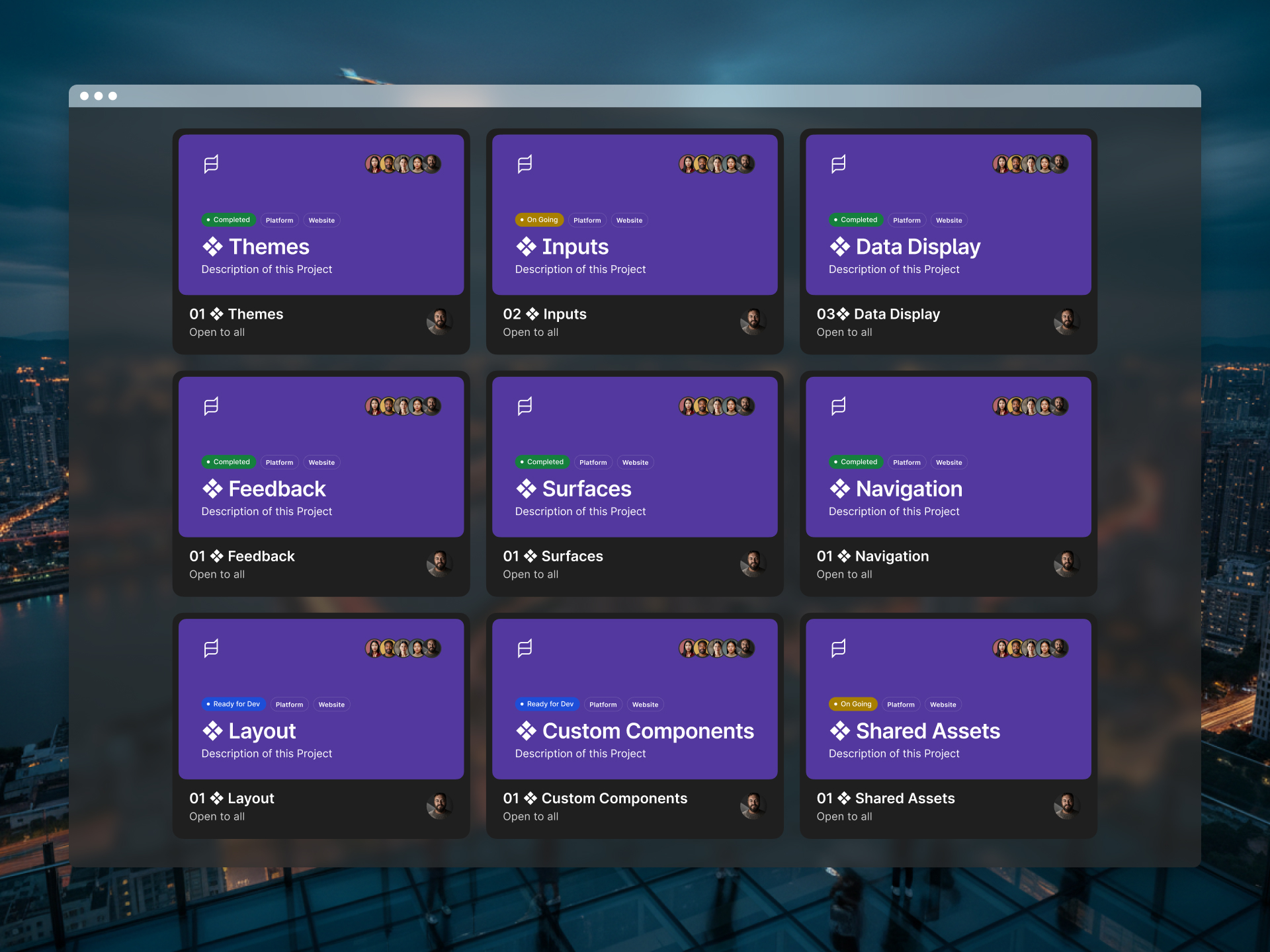
As the platform expanded across multiple products, workflows and customer types, maintaining consistency became increasingly difficult.
Teams were solving similar problems repeatedly. Design patterns evolved independently. Accessibility standards varied between features. Engineering teams often interpreted the same requirement differently.
The issue wasn’t a lack of good design.
The issue was a lack of shared foundations.
Without a common system, every new feature increased complexity, design debt and implementation effort.
The challenge was creating a foundation capable of supporting future growth while improving consistency, accessibility and development efficiency across the platform.
One of the biggest shifts in my thinking was recognising that individual screens were no longer the most important design deliverable.
As the platform matured, the real opportunity was creating systems that allowed teams to make better decisions repeatedly and consistently.
Rather than focusing on isolated features, I approached the work as a platform-wide foundation.
The goal was to create a shared language between design and engineering while reducing duplication, increasing accessibility and improving long-term scalability.
Key goals included:
• Improving consistency across products
• Reducing design and engineering duplication
• Strengthening accessibility standards
• Accelerating product development
• Creating a shared implementation language
• Supporting future platform growth
Every decision was guided by a simple question:
Would this make future work easier, faster and more consistent?
Building semantic foundations
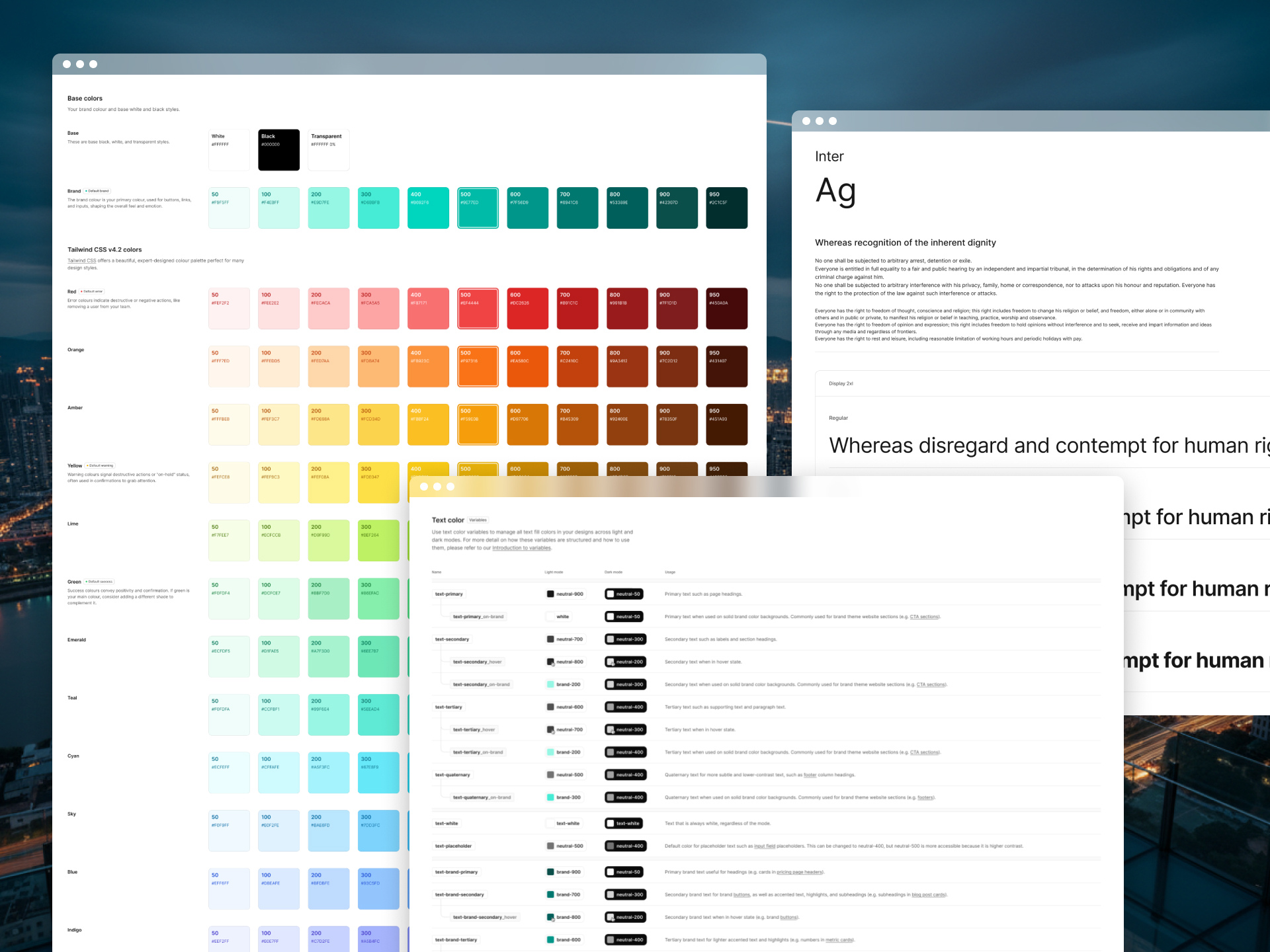
Rather than relying on component-specific styling, I introduced semantic design tokens that reflected product intent rather than visual appearance.
This created a more flexible foundation capable of supporting future themes and product evolution.
Connecting design to implementation
One of the biggest sources of inconsistency often occurs during handoff.
I introduced a scalable variable architecture that aligned design decisions directly with implementation, reducing interpretation and improving consistency across teams.
Prioritising accessibility from the start
Accessibility is often treated as a later enhancement.
I deliberately approached it as a foundational requirement.
This influenced colour systems, typography, component behaviour and interaction patterns from the beginning rather than retrofitting accessibility later.
Creating a shared language
The most valuable outcome wasn’t a component library.
It was a common vocabulary that allowed designers and engineers to discuss problems, solutions and implementation using the same framework.
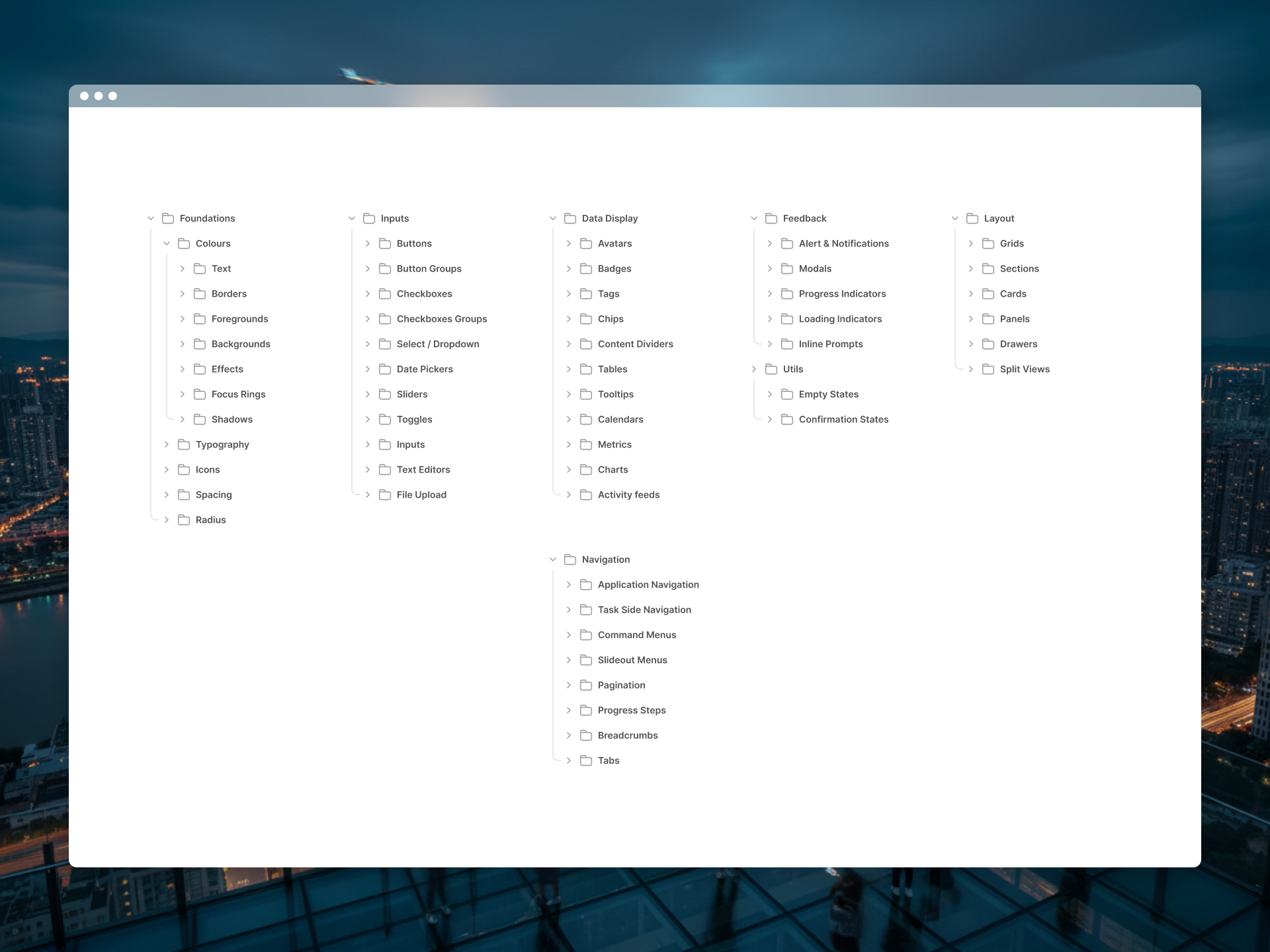
The final foundation combined design standards, accessibility principles and implementation guidance into a scalable system designed to support future product development.
The system included:
• Semantic design tokens
• Colour foundations
• Typography scales
• Spacing systems
• Reusable components
• Form patterns
• Navigation patterns
• Data display patterns
• Feedback and status components
• Accessibility standards
• Documentation and implementation guidance
Rather than prescribing individual screen designs, the system provided teams with the building blocks required to create consistent experiences across the platform.
My goal wasn’t to build a component library.
It was to create a system that made good decisions easier to repeat.
Looking back, the biggest success wasn’t the number of components created.
It was changing how teams approached product development.
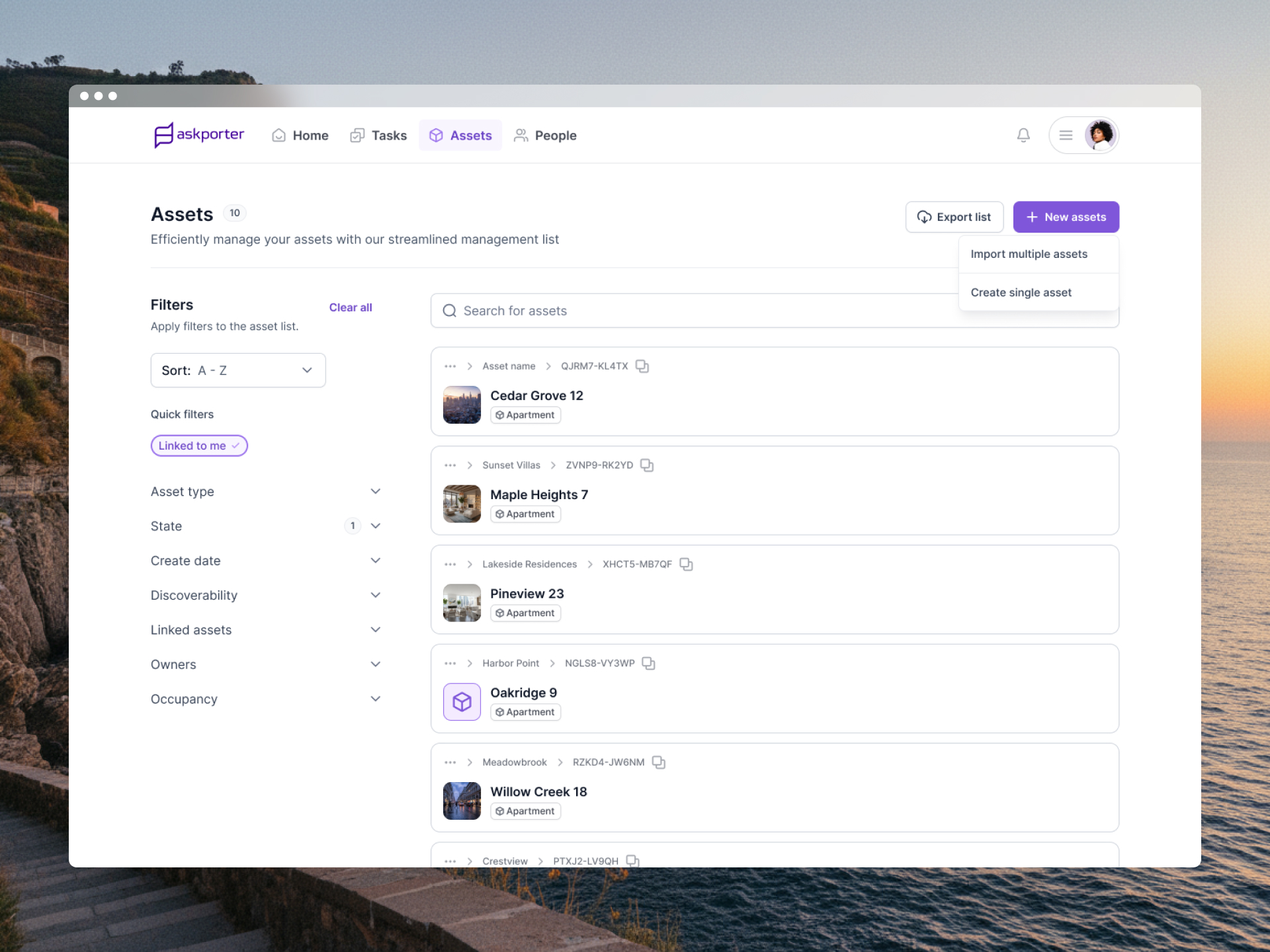
The platform moved away from designing individual screens in isolation and towards building reusable systems capable of supporting long-term growth.
Benefits included:
• Greater consistency across products
• Reduced design and engineering duplication
• Stronger accessibility standards
• Faster implementation of new features
• Improved collaboration between teams
• Increased confidence when scaling the platform
This project reinforced something I’ve learned throughout my career:
Great products aren’t built from individual screens.
They’re built from systems that help teams make consistently good decisions over time.
LET’S MAKE CLARITY A HABIT.
Have a product, platform, or operational challenge in mind?
I help organisations simplify complexity, create scalable foundations, and build digital products that deliver lasting value.