.svg)
.svg)
One pattern kept appearing during customer conversations.
When tasks became overdue, teams rarely lacked notifications.
They lacked clarity around ownership.
As organisations grew across multiple buildings, properties and operational teams, responsibility became increasingly fragmented. Work would sit unresolved while different teams assumed someone else was already dealing with it.
The challenge wasn’t reminding people that work was overdue.
The challenge was creating a framework that made accountability visible, scalable and consistent across very different organisational structures.
Early discovery revealed that escalation wasn’t simply an alerting problem.
Most organisations already had emails, reports and notifications.
The real issue was that accountability often existed outside the workflow itself.
I wanted escalation to become part of the operational experience rather than something managers had to manually monitor.
The design needed to support both administrators configuring escalation policies and operational teams managing work day-to-day.
Key goals included:
• Reducing manual oversight
• Supporting different organisational structures
• Automating escalation processes
• Making ownership visible
• Helping teams prioritise overdue work
• Increasing confidence in SLA compliance

Rather than creating another notification system, I focused on ensuring accountability remained visible throughout the lifecycle of a task.
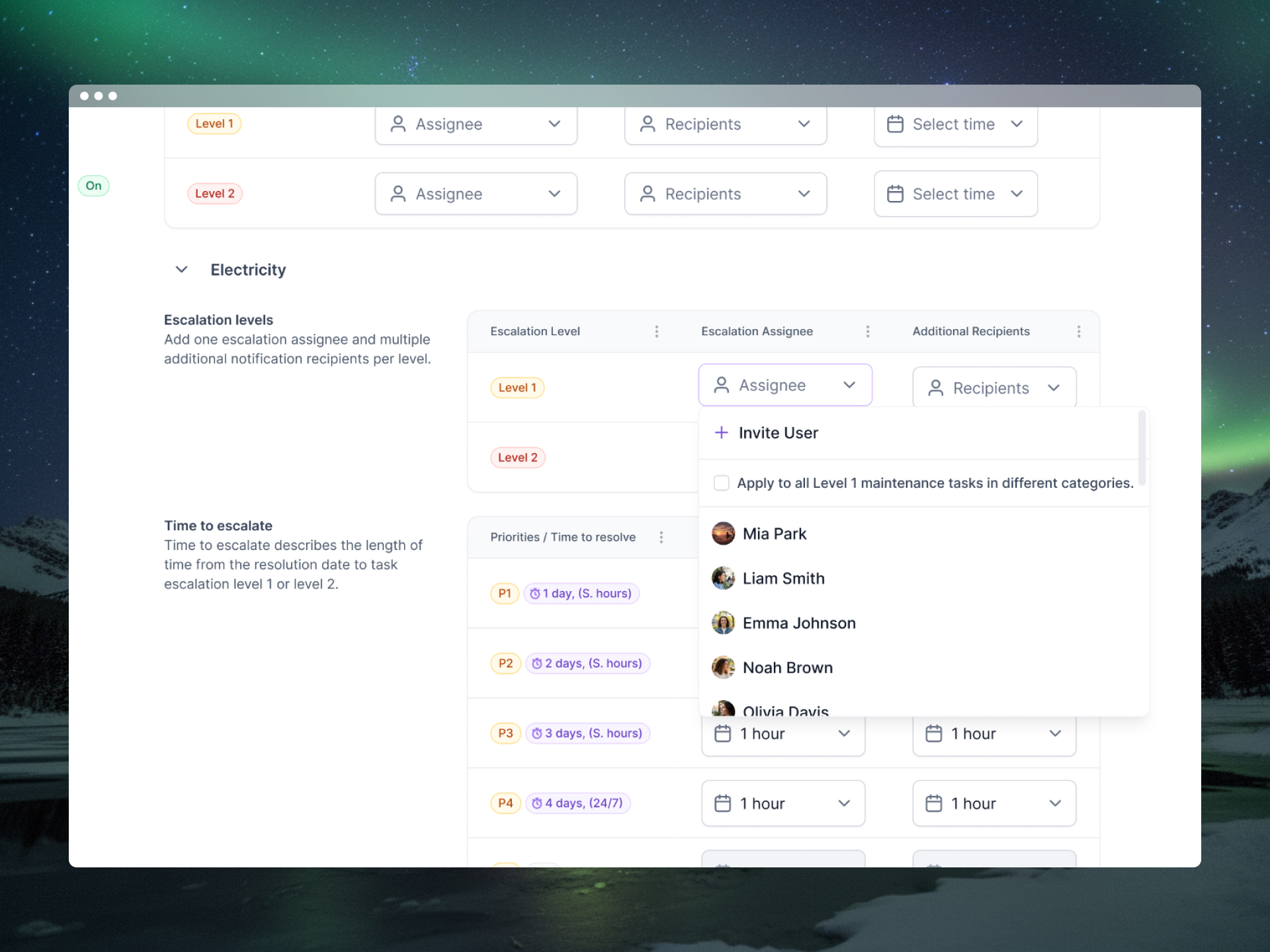
Configuring escalations at asset level
I chose to associate escalation rules directly with assets rather than creating a single global framework.
In practice, different buildings, properties and operational areas often required different service expectations and escalation paths.
This provided flexibility without introducing unnecessary complexity.
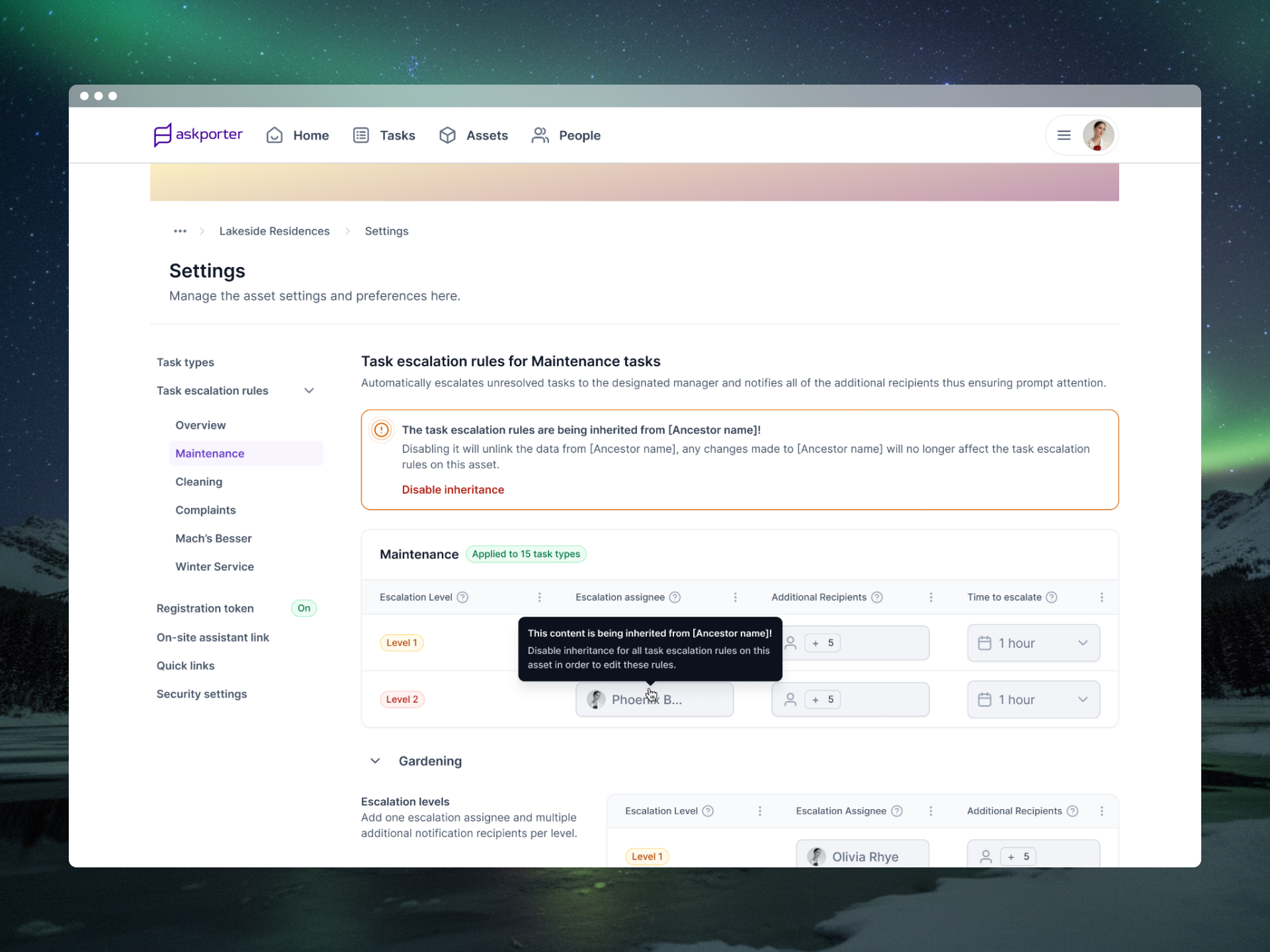
Supporting multiple escalation levels
Accountability rarely sits with a single individual.
Allowing tasks to progress through multiple levels of responsibility ensured unresolved work continued moving through the organisation rather than becoming stuck with one team.
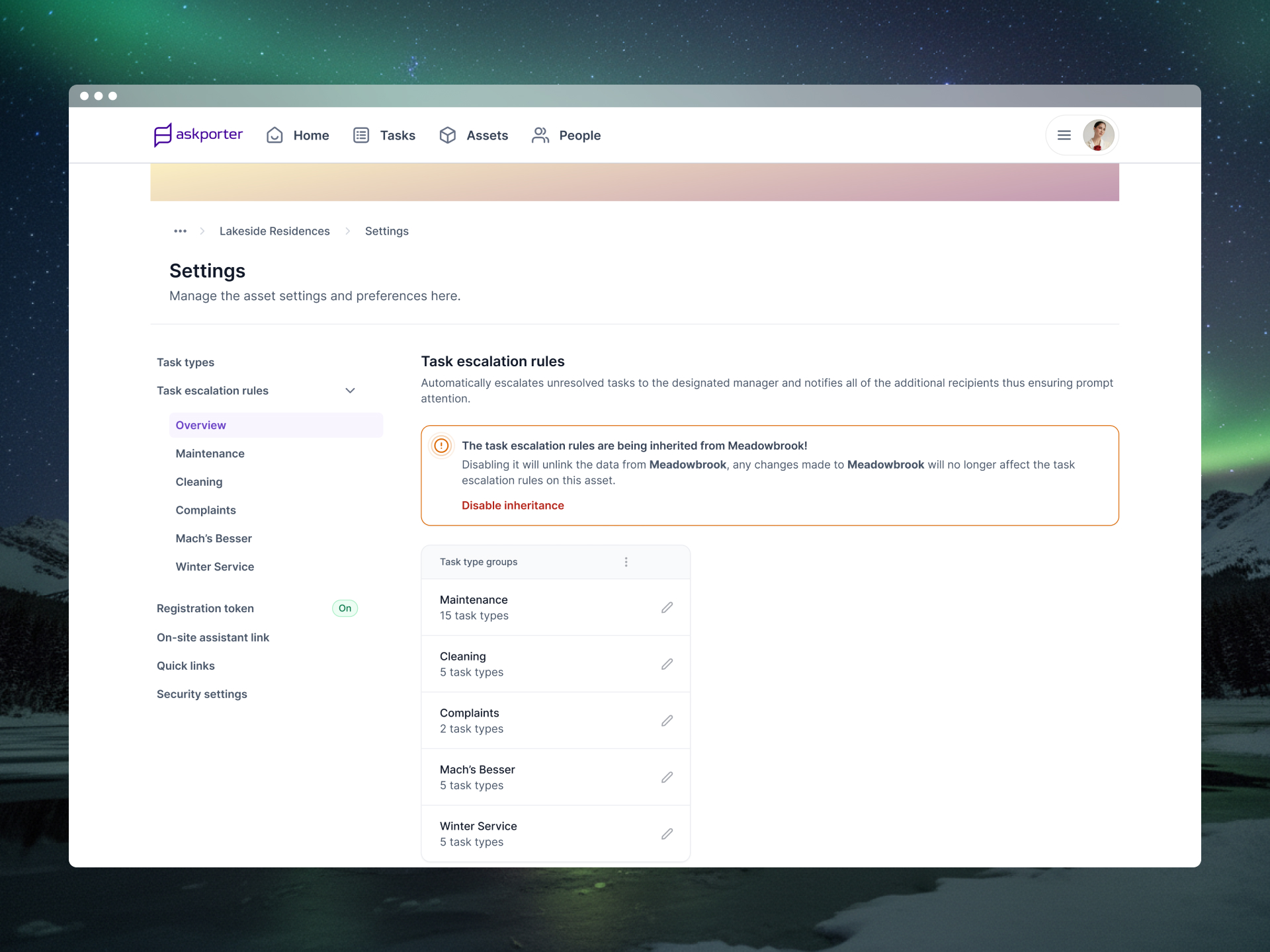
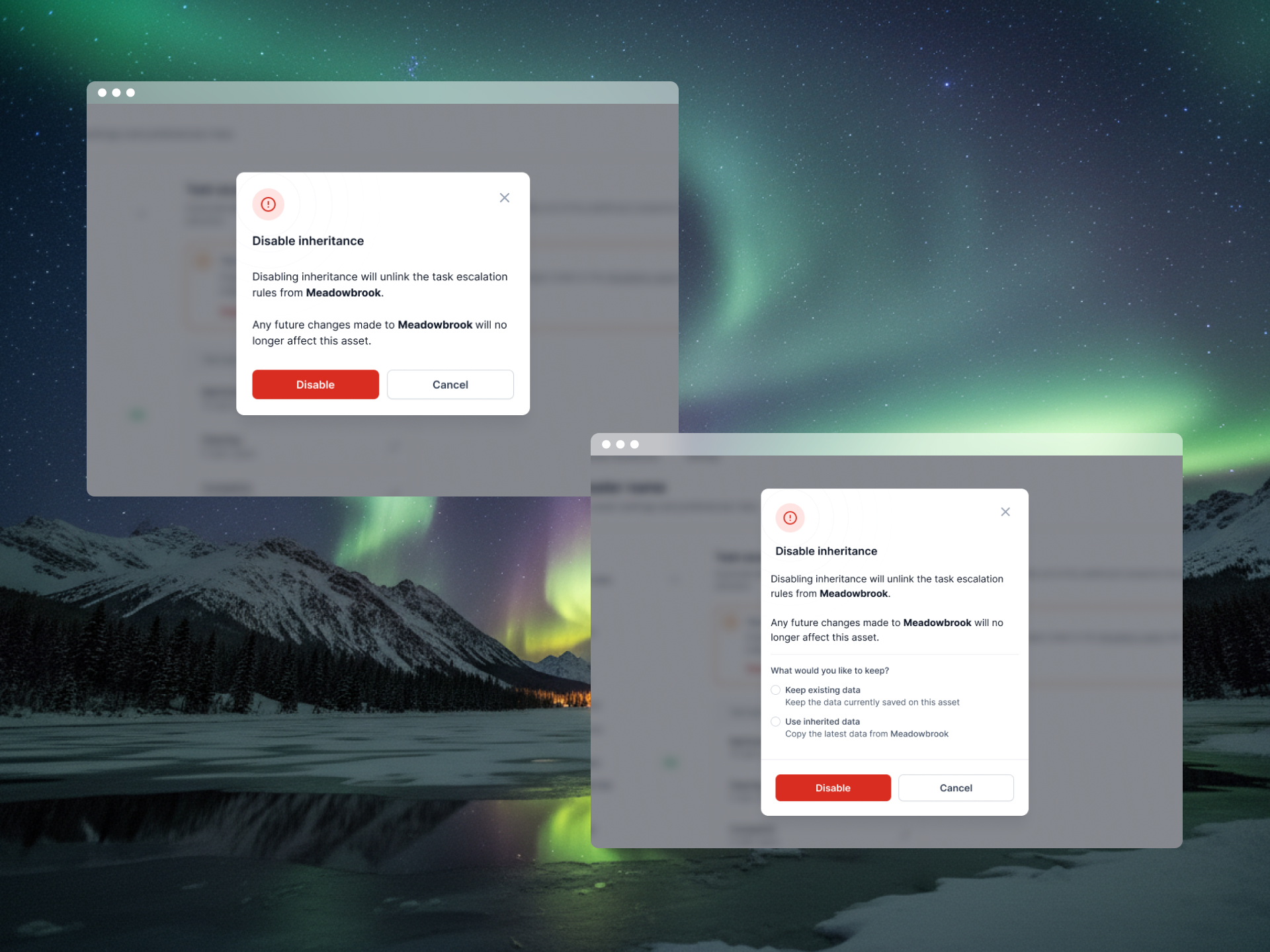
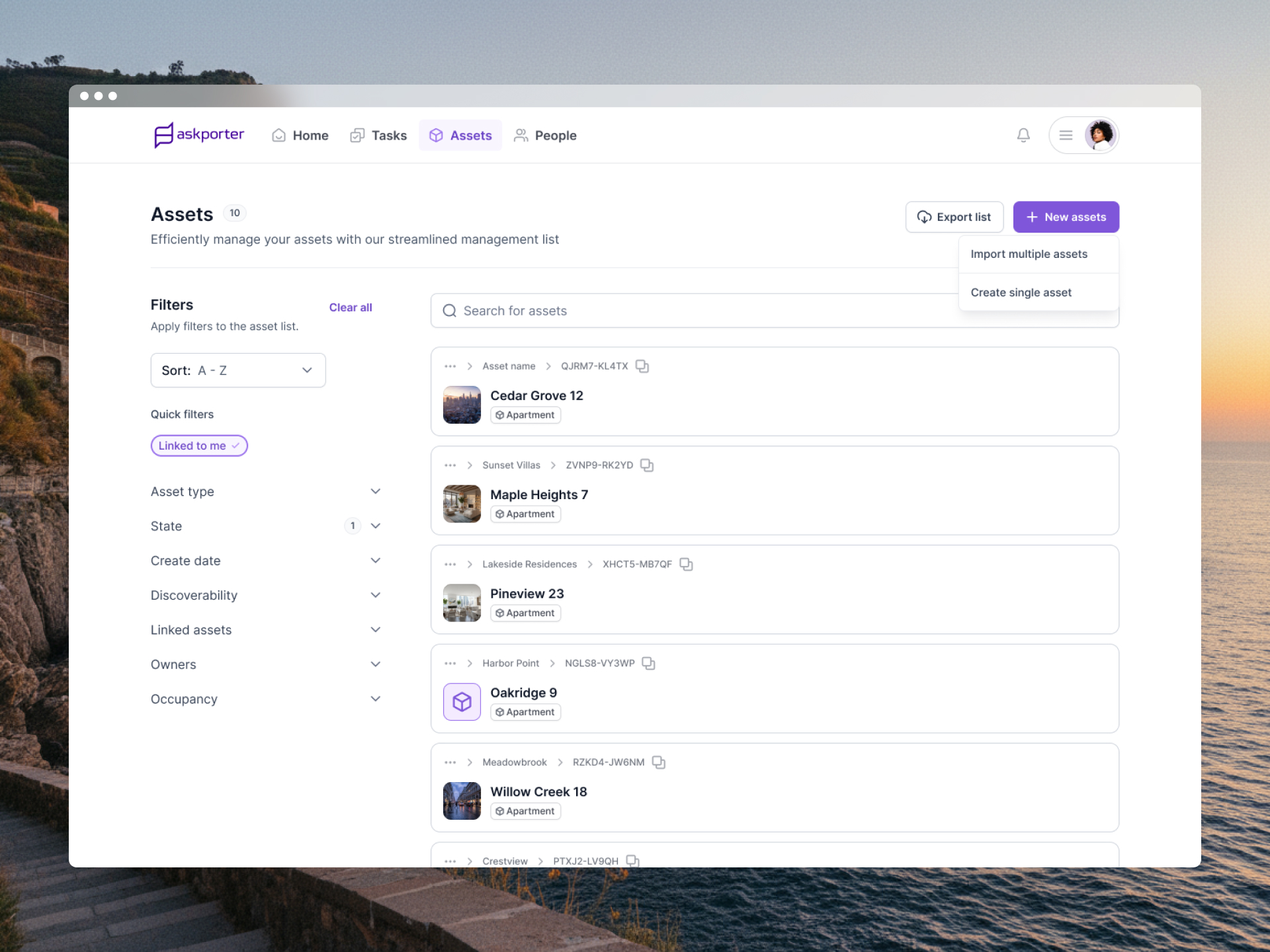
Enabling inheritance and reuse
One of the biggest risks with enterprise systems is configuration overhead.
Allowing assets to inherit escalation rules reduced administration while maintaining consistency across large portfolios.
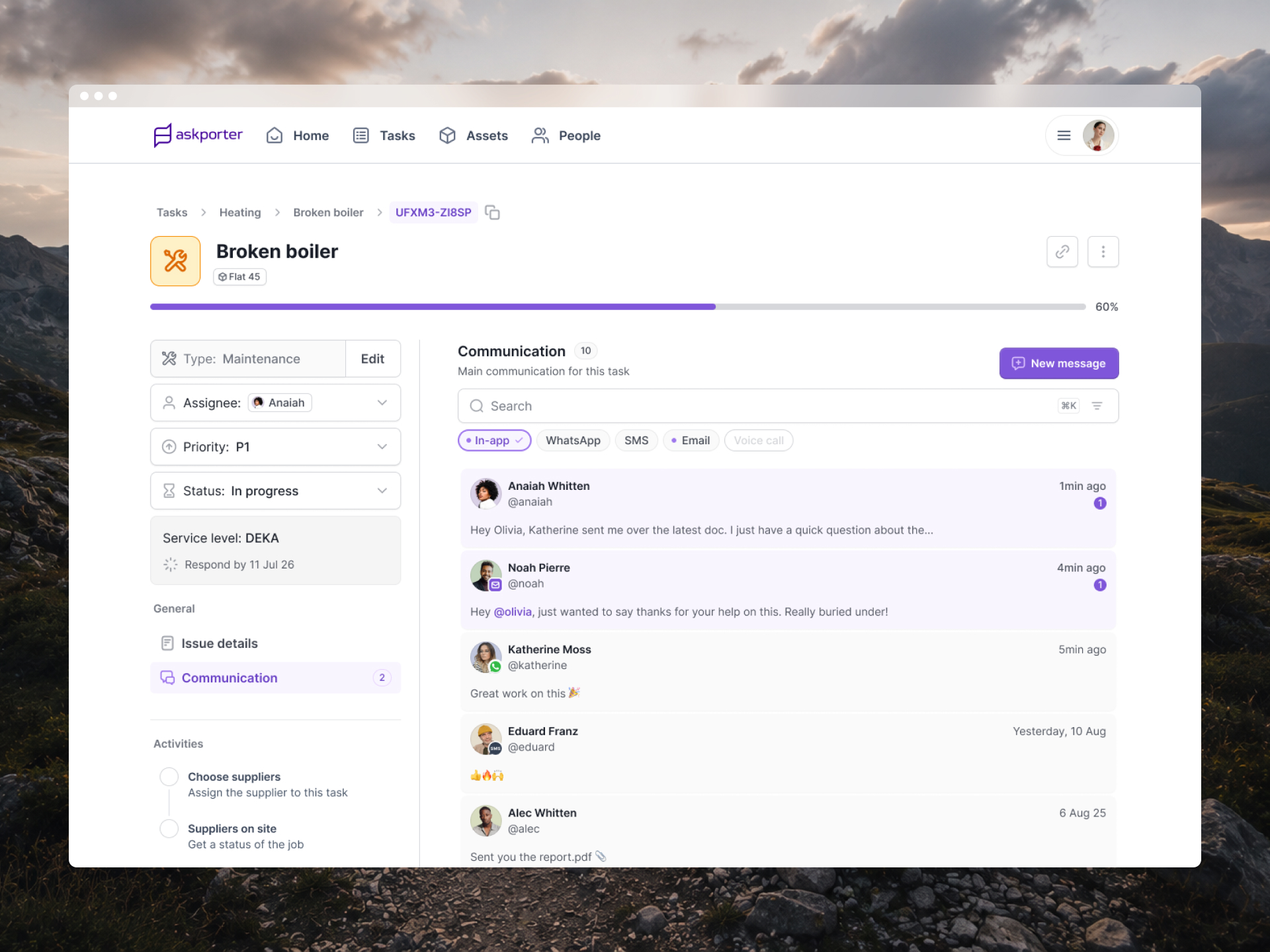
Maintaining visibility within the workflow
I deliberately avoided hiding escalation information inside administration screens.
Ownership, escalation status and urgency remained visible directly within task workflows, helping teams understand responsibility without leaving their current context.
The final solution introduced a configurable escalation framework that continuously monitored unresolved work and automatically triggered actions based on predefined service rules.
Rather than relying on managers to manually track overdue tasks, the system proactively routed accountability through the organisation.
Administrators could:
• Define escalation levels
• Assign escalation owners
• Configure additional recipients
• Set escalation timings
• Apply rules across task groups
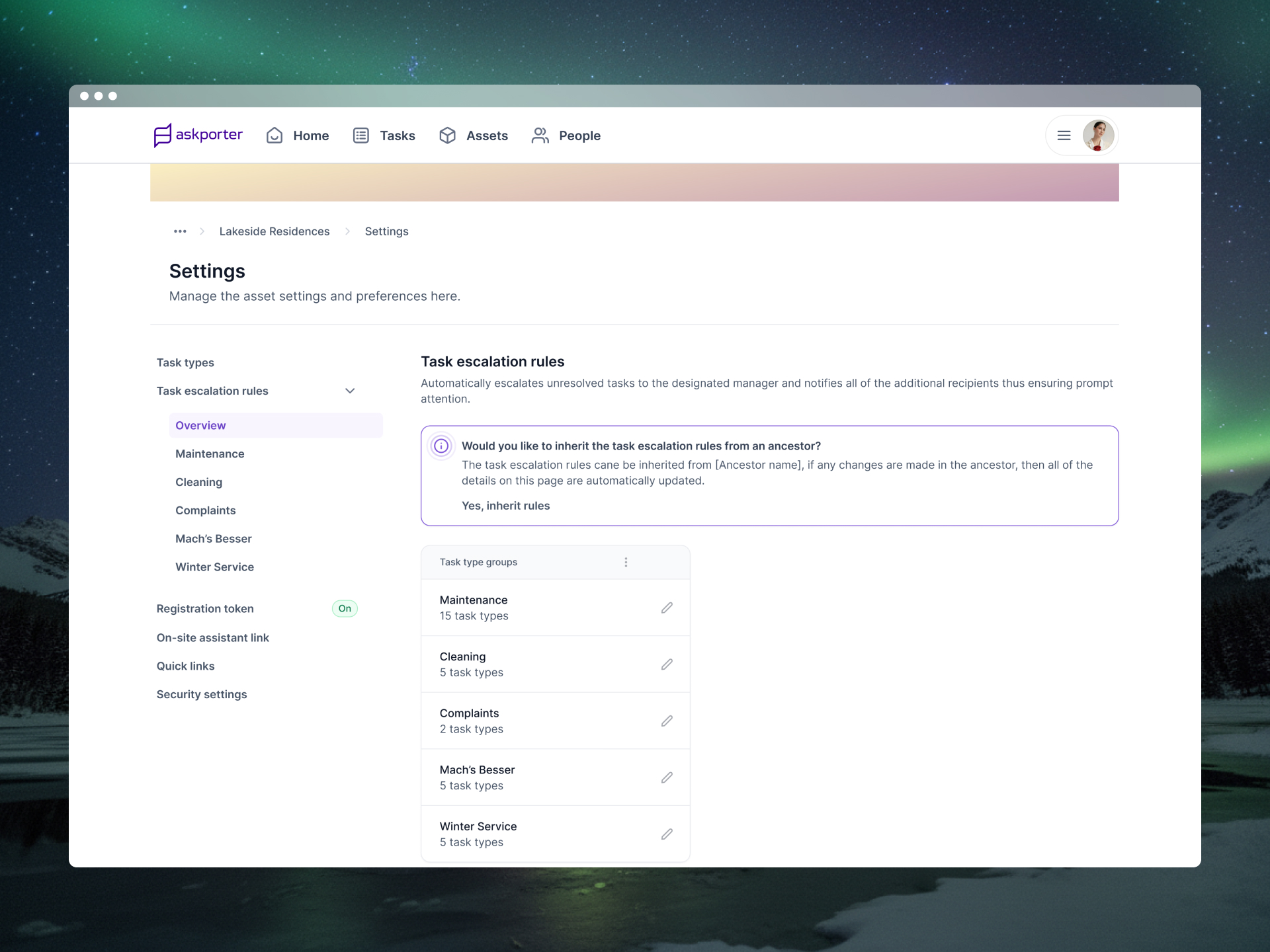
• Inherit rules from parent assets
Operational teams gained visibility into active escalations directly within their existing workflows, helping them understand ownership and urgency without additional reporting tools.
My goal wasn’t to create more notifications.
It was to ensure work always had a clear path forward.
The biggest success wasn’t the automation itself.
It was reducing the amount of effort required to understand who owned a problem.
By making accountability visible and automating escalation processes, organisations could focus less on chasing work and more on resolving it.
Benefits included:
• Greater operational accountability
• Improved SLA compliance
• Reduced risk of missed tasks
• Faster intervention on overdue work
• Lower administrative effort
• Consistent escalation processes across large portfolios
This project reinforced something I’ve observed repeatedly throughout enterprise software:
Most operational failures don’t happen because people don’t care.
They happen because ownership becomes unclear as complexity grows.
LET’S MAKE CLARITY A HABIT.
Have a product, platform, or operational challenge in mind?
I help organisations simplify complexity, create scalable foundations, and build digital products that deliver lasting value.