.svg)
.svg)
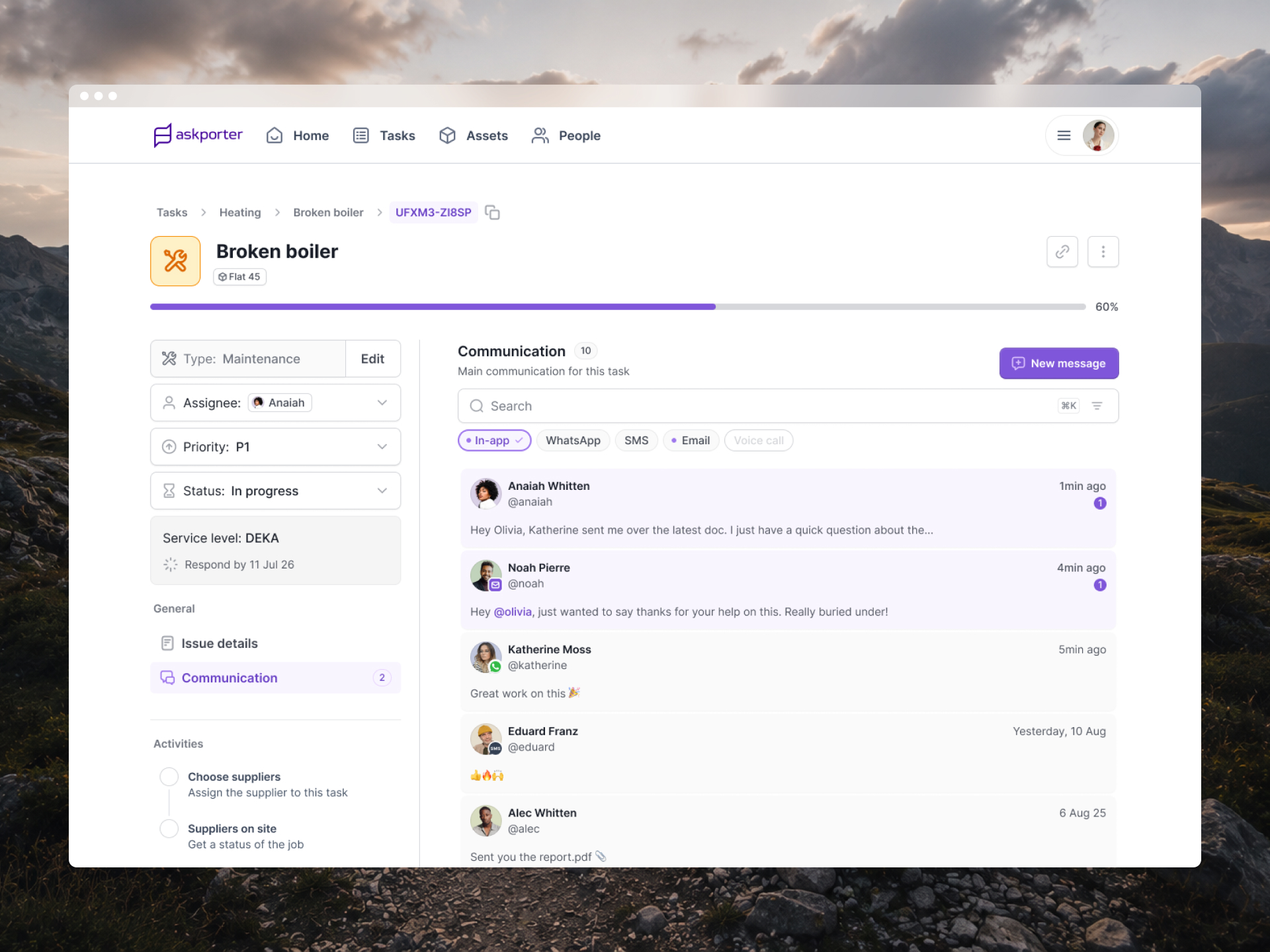
People were communicating constantly.
The problem was that conversations were scattered across emails, phone calls, messaging apps and internal systems, making it difficult to understand the full story behind a task.
As communication volumes increased, teams spent more time searching for information, reconstructing decisions and chasing updates than actually resolving issues.
The challenge wasn’t helping people send messages.
The challenge was helping them maintain context.
Early in discovery, I noticed that most communication tools treated conversations as a separate destination.
Users would leave their task, switch applications, search for information, then return to continue working.
Every context switch created friction.
My goal was to bring communication into the operational workflow itself, ensuring conversations, files, updates and decisions remained connected to the work they related to.
Key goals included:
• Reducing context switching
• Improving visibility across teams
• Preserving decision history
• Supporting multiple communication styles
• Making information easier to find
• Maintaining traceability throughout the lifecycle of a task
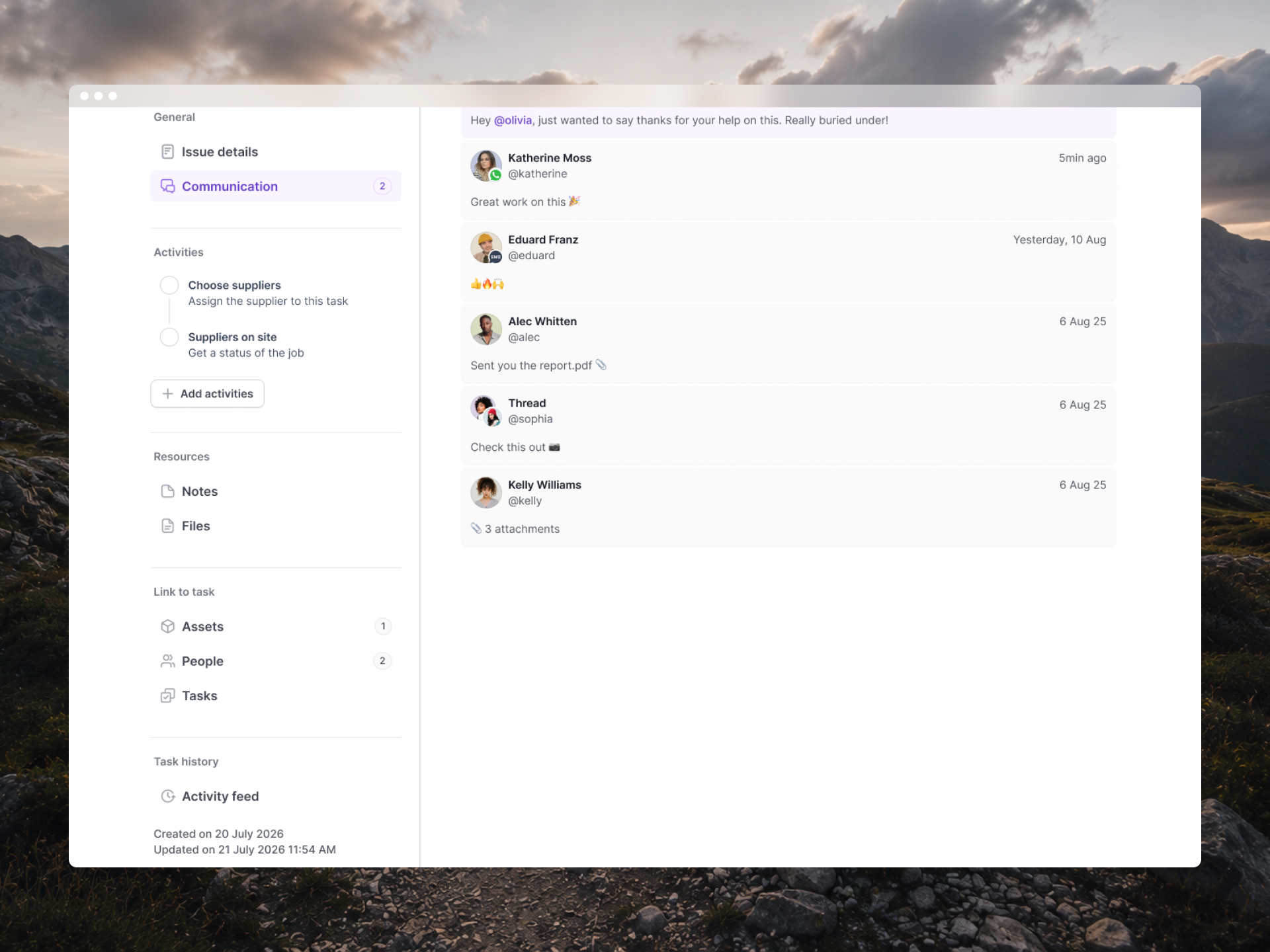
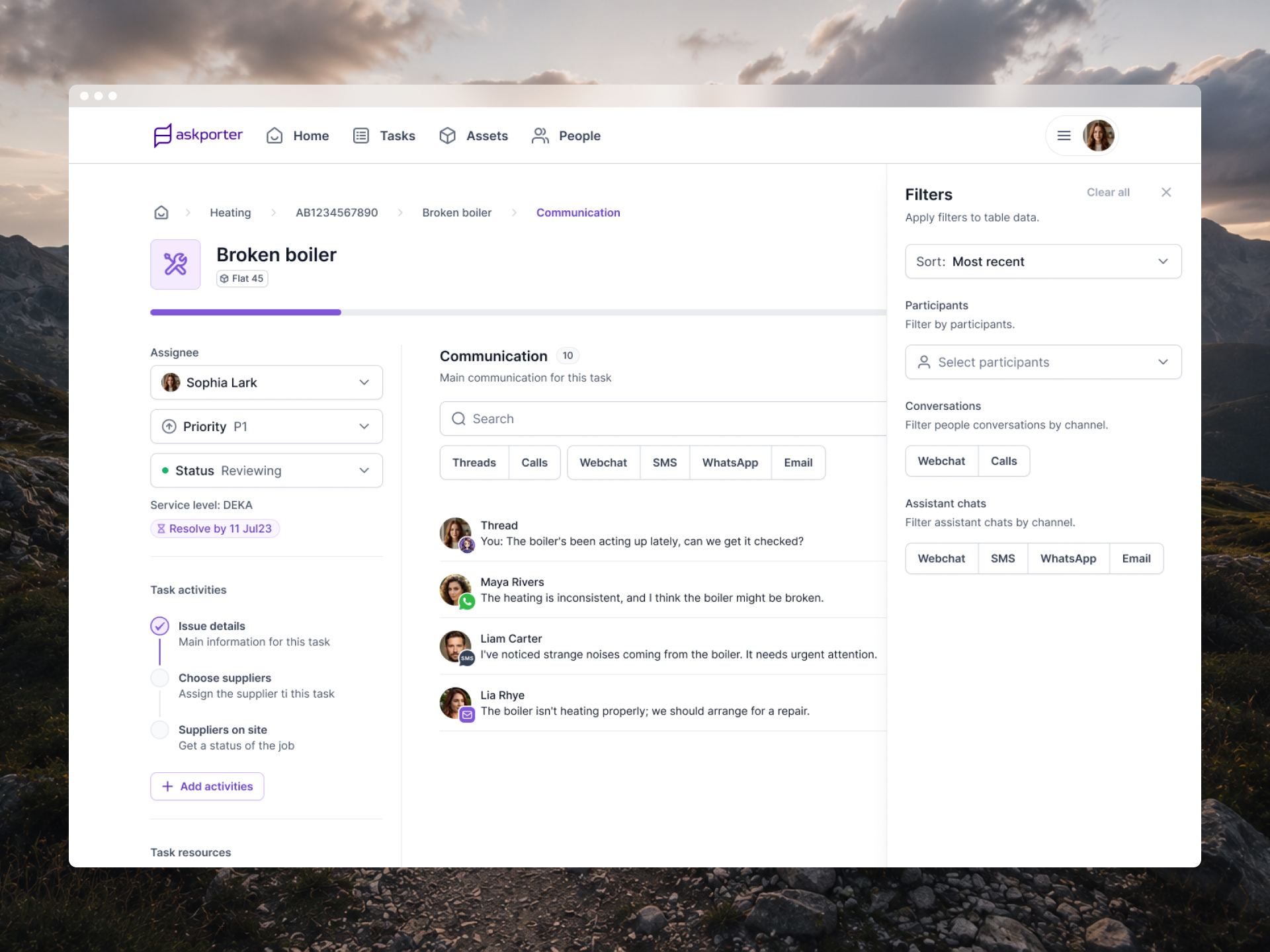
Several important decisions focused on ensuring communication remained connected to operational activity rather than becoming another disconnected tool.
Embedding communication directly into tasks
Rather than creating a separate messaging experience, conversations became part of the task itself.
This ensured users always had immediate access to the context surrounding discussions without needing to search elsewhere.
Supporting multiple communication formats
Different situations require different ways of communicating.
The platform supported messaging, attachments, updates, voice notes and assistant-driven interactions while maintaining a single source of truth.
Making information discoverable
As communication volumes grow, finding the right information becomes more valuable than generating new information.
Search, filtering and participant visibility helped users quickly locate conversations, decisions and supporting content.
Preserving operational history
One of the biggest frustrations users described was losing visibility into previous decisions.
Maintaining a complete communication timeline helped teams understand what happened, why decisions were made and who was involved.
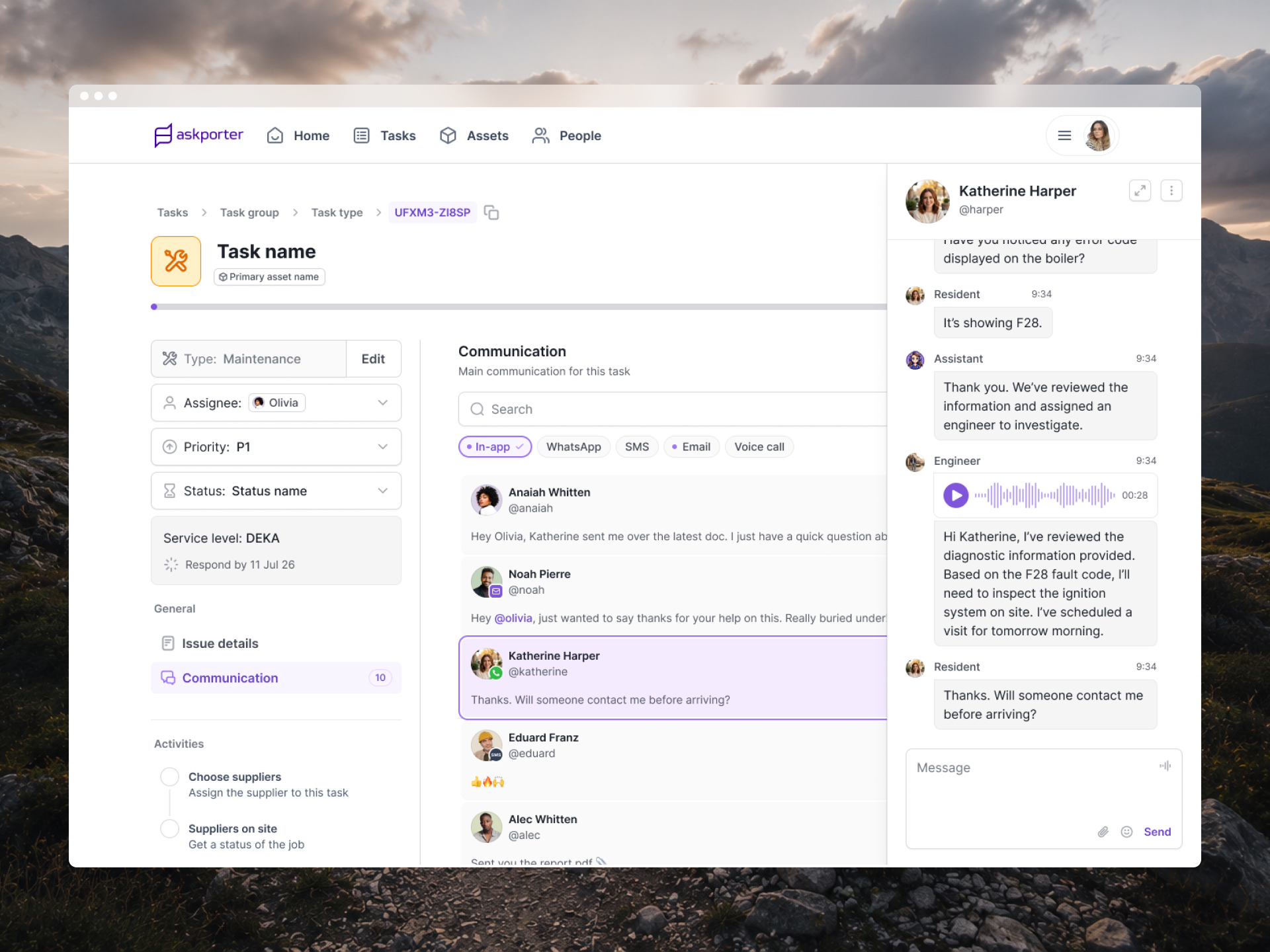
The final solution introduced a unified communication framework embedded directly within operational workflows.
Conversations, files, updates, voice notes and assistant-driven interactions were brought together into a single experience connected to tasks, assets and operational activities.
Users could:
• Communicate within the context of a task
• Share files and supporting information
• Access complete activity history
• Collaborate across teams and suppliers
• Search conversations and decisions
• Use assistant-driven interactions to accelerate communication
• Access information across multiple devices
My goal wasn’t to create another messaging platform.
It was to ensure communication always remained connected to the work it supported.

Looking back, the most valuable outcome wasn’t faster messaging.
It was the reduction in effort required to understand what was happening.
By keeping communication attached to operational activity, teams gained greater visibility into conversations, decisions and progress without relying on disconnected tools.
Benefits included:
• Improved operational visibility
• Reduced context switching
• Better collaboration across teams
• Faster access to information
• Stronger auditability and traceability
• Improved continuity across the lifecycle of a task
The project reinforced something I’ve seen throughout my career:\
People rarely struggle because information doesn’t exist.
They struggle because the information they need is disconnected from the moment they need it.
LET’S MAKE CLARITY A HABIT.
Have a product, platform, or operational challenge in mind?
I help organisations simplify complexity, create scalable foundations, and build digital products that deliver lasting value.