.svg)
.svg)
Why Most Workflow Software Gets More Complex Over Time
Most teams try to simplify workflows by removing steps and hiding information. In my experience designing operational software, complexity rarely comes from the interface itself. It comes from the business behind it.
.svg)
.svg)

Why Most Workflow Software Gets More Complex Over Time
One thing I’ve noticed after years designing products for Facilities Management, Housing Associations and Build-to-Rent operators is that workflow software almost always becomes more complex over time.
Not because designers fail.
Not because the product team made poor decisions.
And not because users are asking for too much.
It happens because the businesses themselves become more complex.
As organisations grow, they introduce new teams, suppliers, approval processes, service levels, compliance requirements and reporting obligations.
The software gradually becomes a reflection of that reality.
Yet whenever people talk about simplifying workflows, the conversation often focuses on reducing screens, removing fields or cutting steps.
While those things can help, I’ve found they rarely address the real problem.
The complexity usually isn’t in the interface.
It’s in the operation behind it.
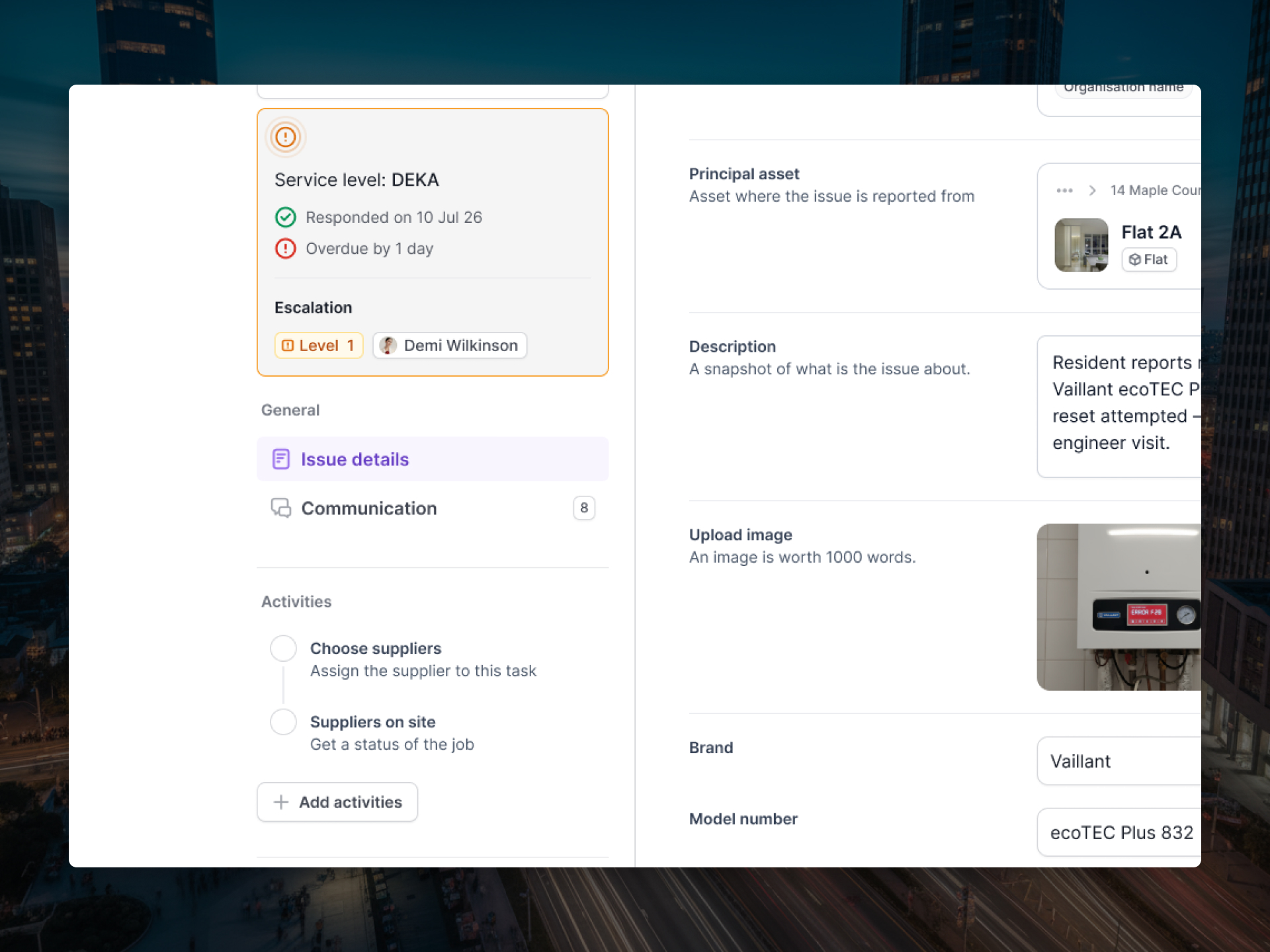
Complexity isn’t the enemy. Uncertainty is. People can navigate complex workflows when they understand what needs attention, who owns it and what happens next.
The Goal Isn’t Simplicity. It’s Clarity.
Earlier in my career, I believed good design meant making everything simpler.
Fewer clicks.
Fewer decisions.
Less information.
Over time, my thinking changed.
A maintenance task might sound straightforward on the surface.
Someone reports an issue.
Someone fixes it.
The task is completed.
But when you look closer, that same task may involve service level agreements, escalation rules, contractors, residents, compliance checks, asset history and internal approvals.
Removing that information doesn’t make the workflow simpler.
It simply forces users to find it somewhere else.
One of the biggest mindset shifts I’ve had as a designer was realising that users are often perfectly capable of handling complexity.
What they struggle with is uncertainty.
They need to know:
• What needs attention
• What happens next
• Who owns the task
• What is blocking progress
When those questions are answered clearly, even highly complex workflows become manageable.
Design Around Decisions
These days I spend less time asking:
“How do we reduce steps?”
And more time asking:
“What decision is the user trying to make?”
A Facilities Manager reviewing hundreds of active jobs doesn’t need every detail immediately.
They need to identify risk.
A Customer Service Agent doesn’t need the entire operational history at once.
They need enough context to respond confidently.
The most successful workflow products I’ve worked on didn’t become simpler over time.
In many ways, they became more sophisticated.
But they also became clearer.
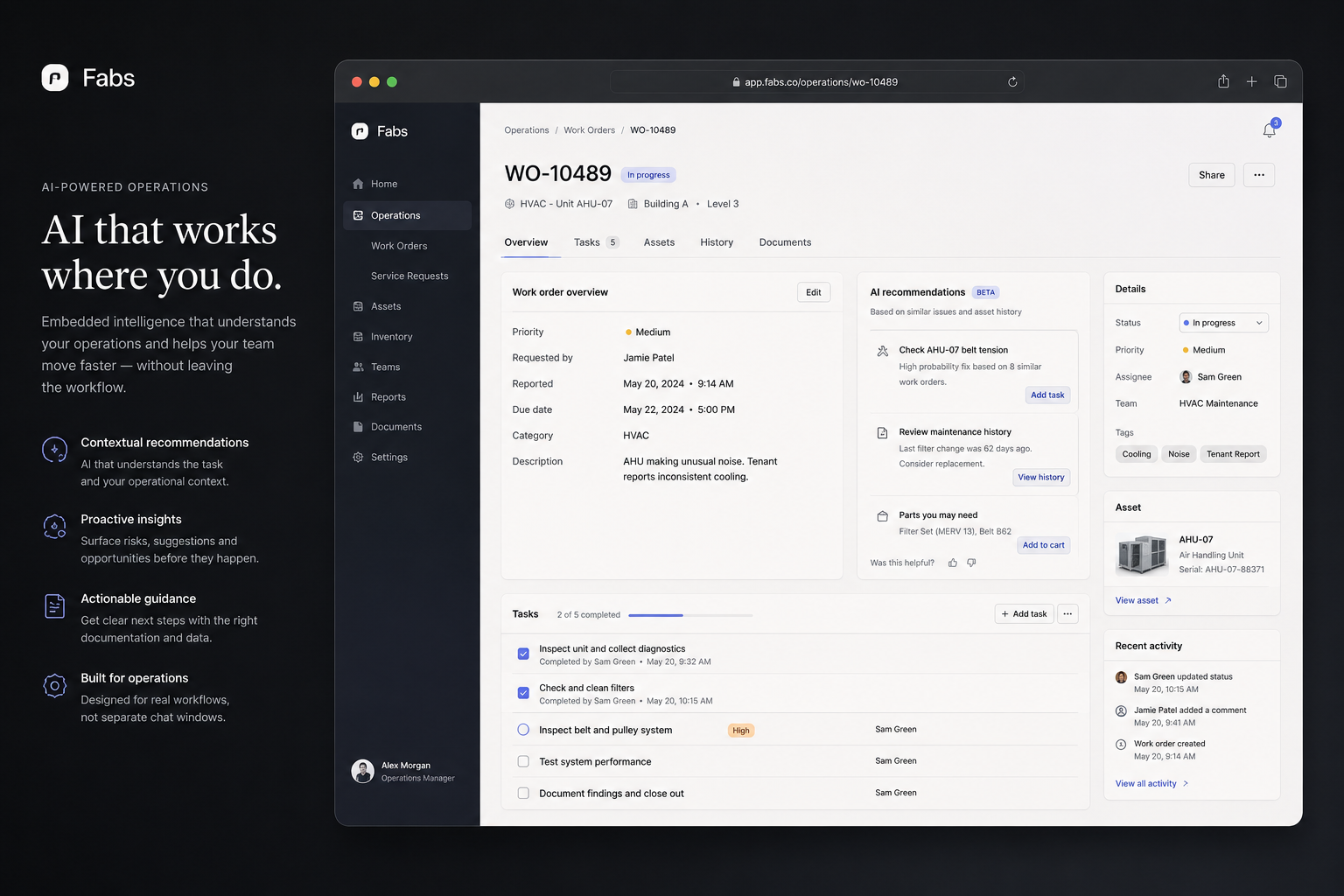
They provided better visibility, stronger accountability and more relevant information at the moment decisions needed to be made.
Complex businesses will always have complex operations.
The role of product design isn’t to pretend that complexity doesn’t exist.
It’s to help people navigate it with confidence.
Similar blogs
.svg)
.svg)
LET’S MAKE CLARITY A HABIT.
Have a product, platform, or operational challenge in mind?
I help organisations simplify complexity, create scalable foundations, and build digital products that deliver lasting value.