.svg)
.svg)
AI Needs Principles Before It Needs Interfaces
After benchmarking leading AI products and designing operational software, I’ve become convinced that successful AI experiences are defined by behavioural principles, not interfaces.
.svg)
.svg)
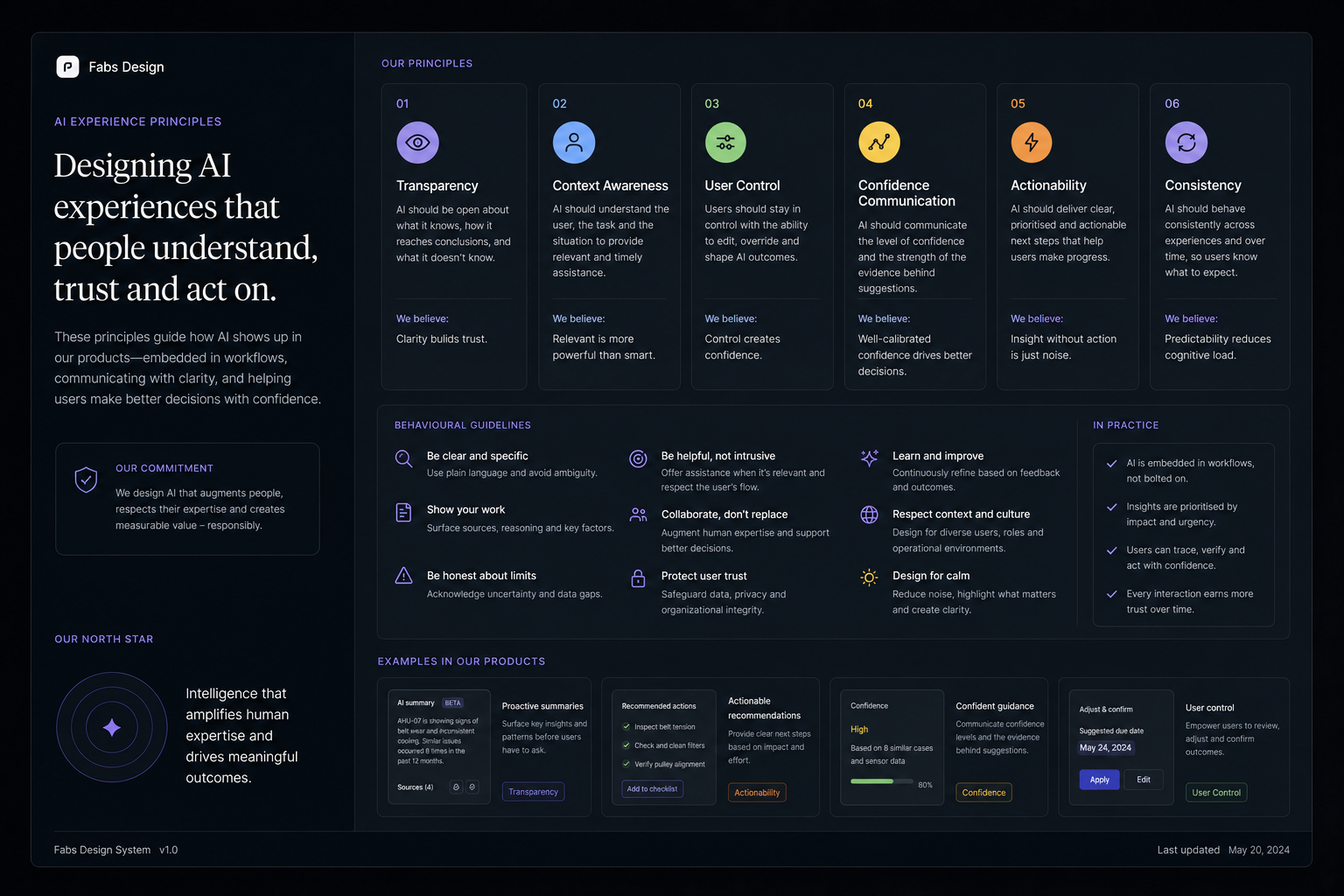
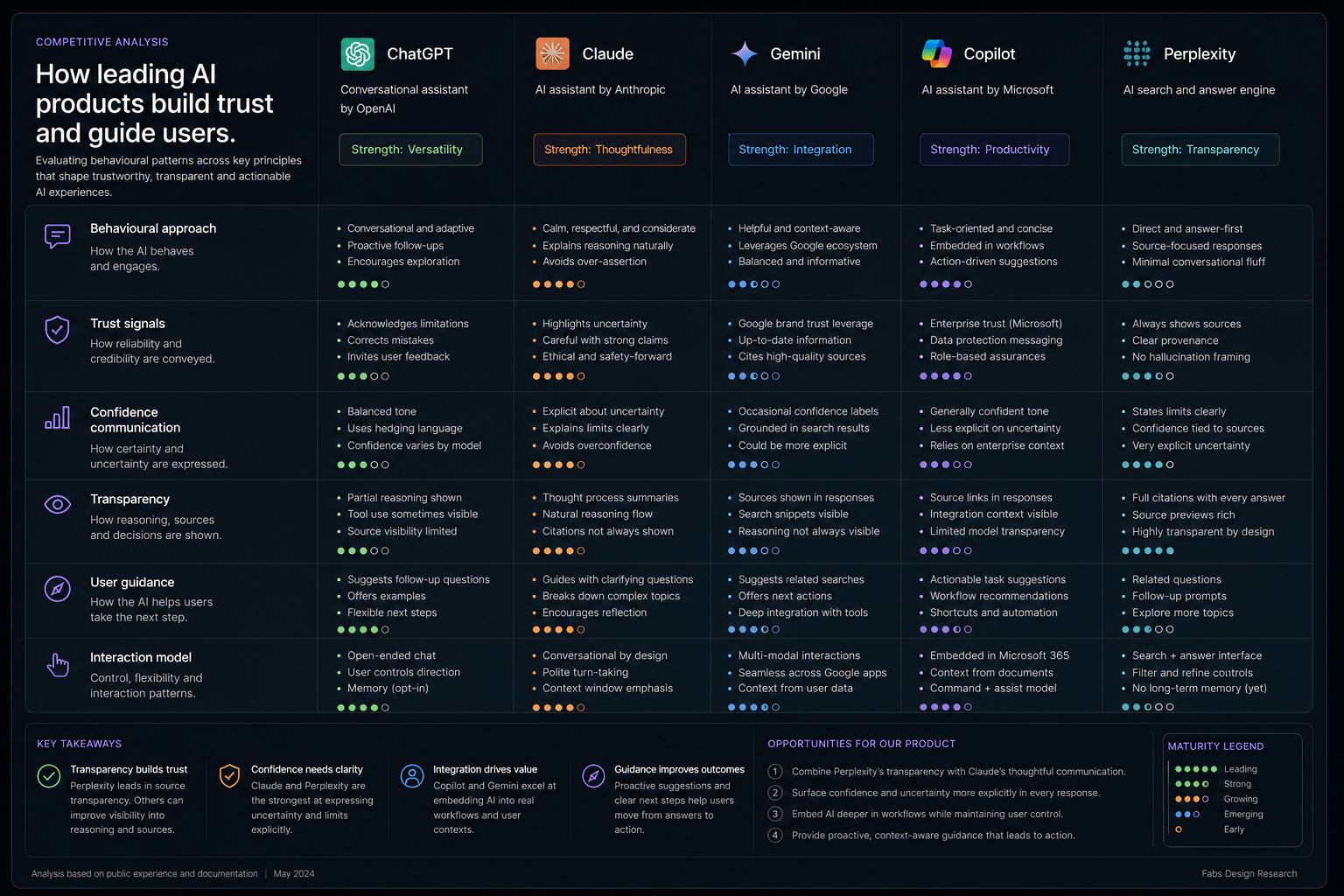
Over the last few months, I've spent a lot of time benchmarking products such as ChatGPT, Claude, Gemini, Copilot and Perplexity.
What surprised me wasn't how different they looked.
Most of them have a prompt box, a conversation area and a way to interact with the model.
What stood out was how differently they behaved.
Some products communicate uncertainty clearly. Others present answers with confidence regardless of how reliable they are. Some explain why they're making a recommendation, while others leave users to work it out for themselves.
The biggest differences weren't in the interfaces, they were in the behaviours.
This observation reminded me of a pattern I've seen repeatedly while designing operational software.
When conducting research with facilities teams, housing providers, customer service teams and operational users, I rarely hear people ask for an AI assistant.
What they ask for is faster diagnosis, better prioritisation, less manual effort, clearer communication and more confidence when making decisions.
They're focused on outcomes.
Yet many product teams start their AI journey by asking:
"How should our AI assistant look?"
I think that's the wrong question.
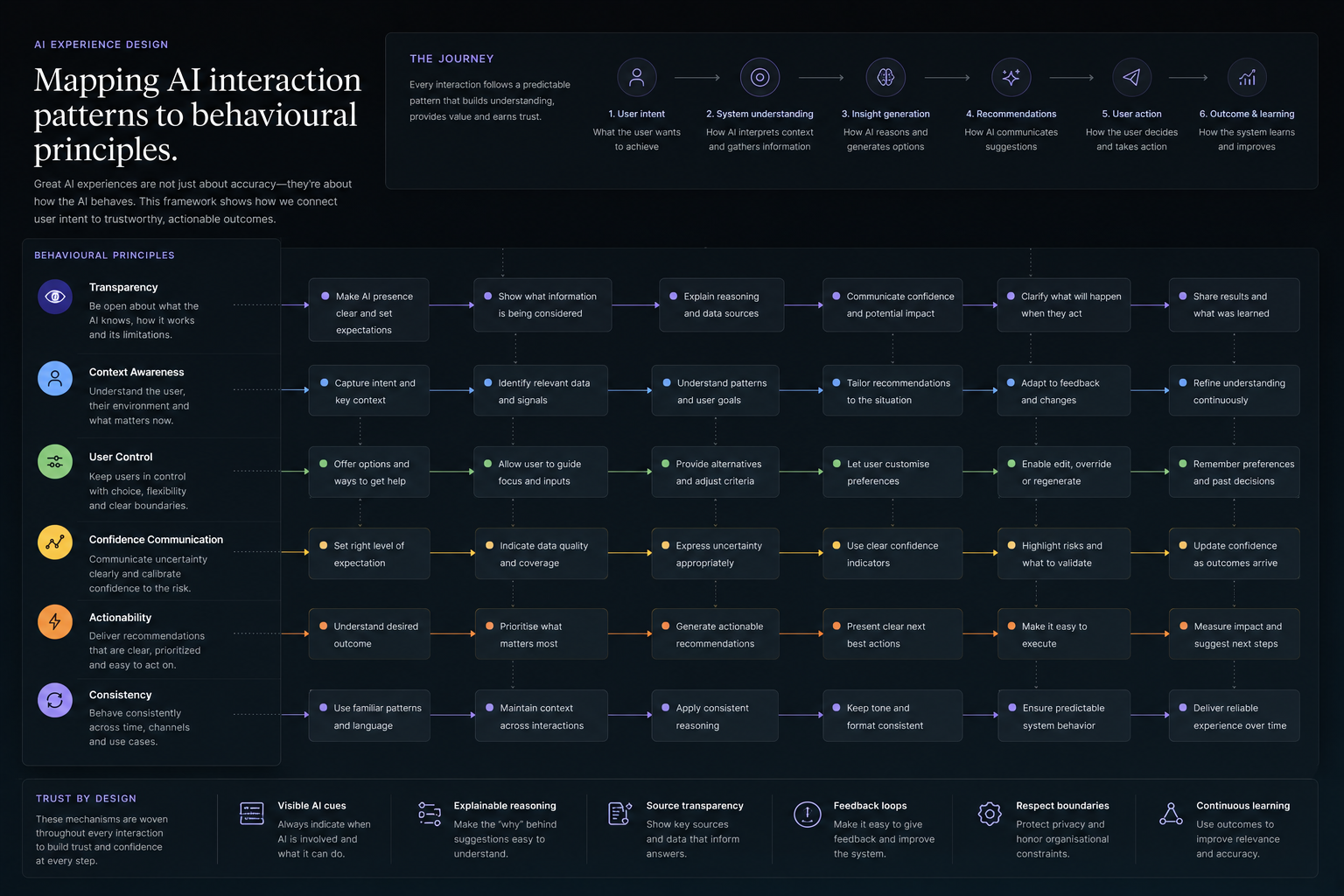
The biggest differences weren't in the interfaces. They were in the behaviours.
A better question is:
"What problem should the AI help solve?"
Without answering that first, AI often becomes a collection of disconnected features that look impressive during demonstrations but struggle to create meaningful value during everyday use.
The interface becomes the focus rather than the outcome.
The more AI products I reviewed, the more I became convinced that users don't judge intelligence based on the interface. They judge it based on behaviour.
Can they trust it?
Does it understand context?
Does it explain itself?
Does it know when it might be wrong?
As organisations introduce AI into more parts of a product, these behaviours become increasingly important.
One feature might explain its reasoning.
Another might not.
One might ask for confirmation before taking action.
Another might act immediately.
Without a shared set of principles, AI experiences quickly become inconsistent.
The result is confusion rather than confidence.
Before designing AI interfaces, I believe teams should define a clear set of behavioural principles.
Questions such as:
• When should AI act versus recommend?
• How much control should users retain?
• How should confidence be communicated?
• How should uncertainty be handled?
• What level of transparency is required?
• How can users understand why something happened?
These decisions shape the experience long before any interface is designed.
During AI experience workshops and benchmarking exercises, I found that principles such as transparency, context awareness, user control, confidence communication and consistency became far more valuable than discussions about visual design.
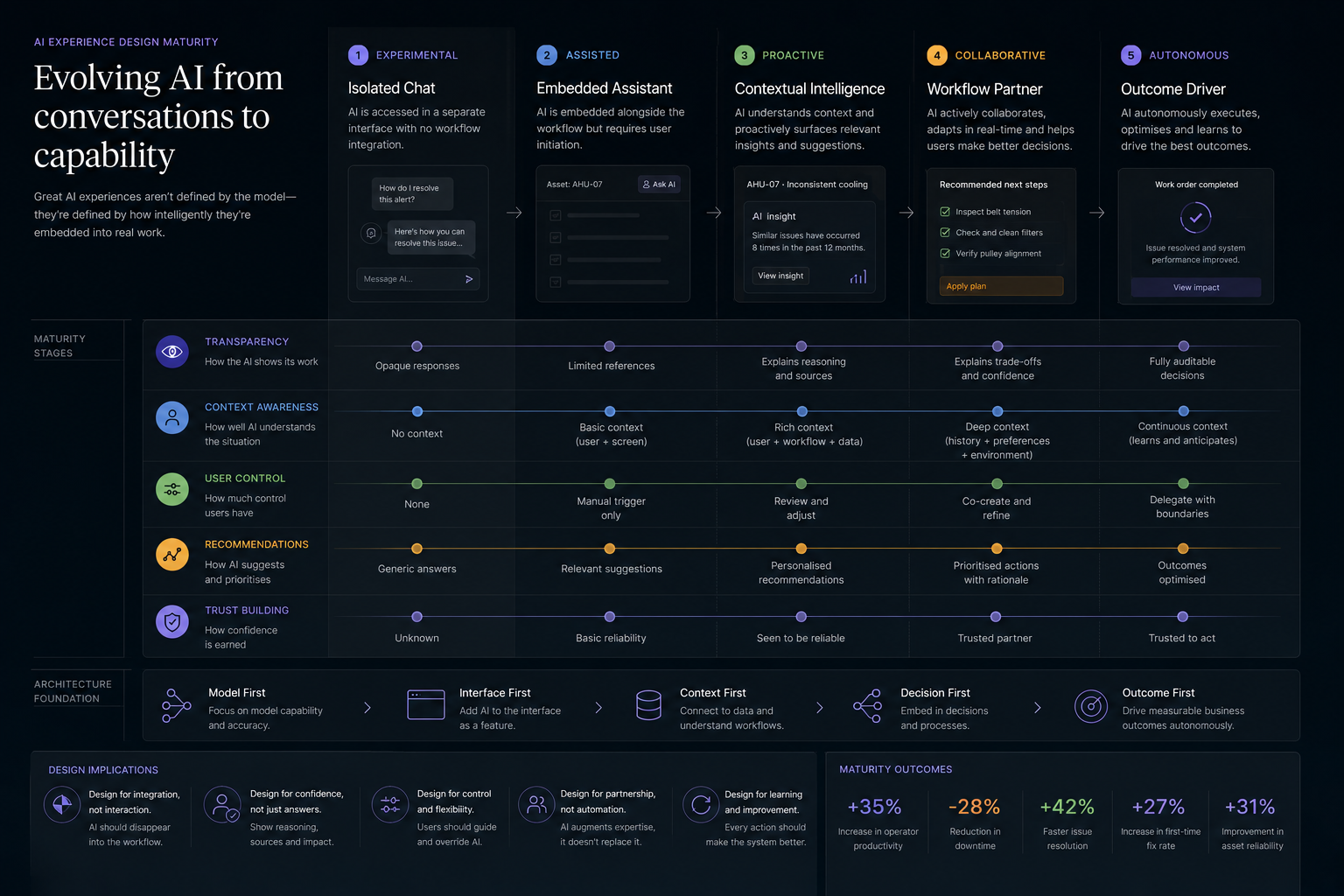
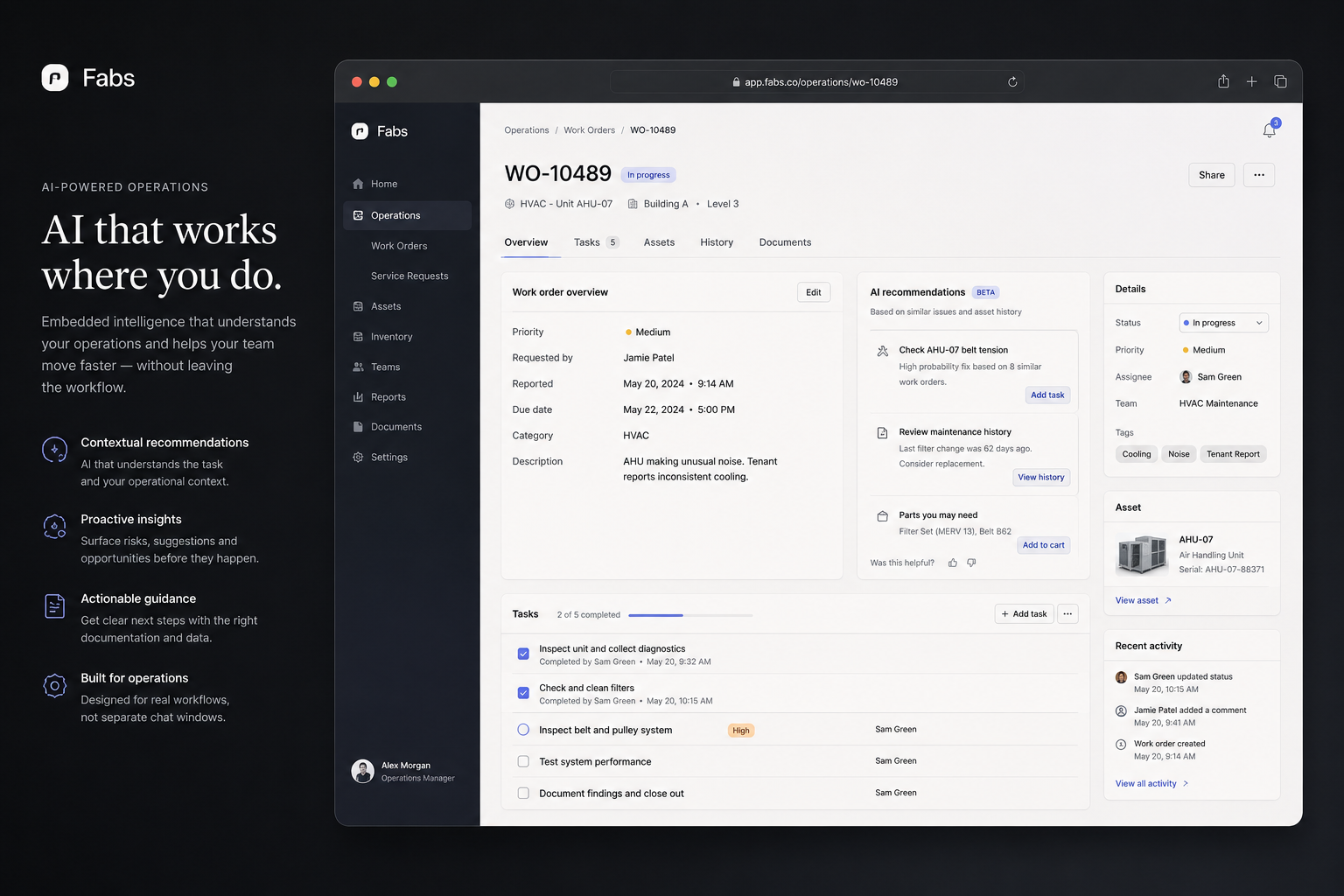
I don't believe the future of AI is thousands of chat windows embedded inside products.
In many cases, users don't want another destination to visit.
They want help where the work is already happening.
Sometimes that may be a conversation.
More often, it might be a recommendation, a summary, a prioritisation decision, an automated action or a suggested next step.
The most effective AI experiences I've seen don't feel like separate products.
They feel like a natural extension of the workflow itself.
That's why I believe AI needs principles before it needs interfaces.
Because long after the prompt box has been designed, it's the behaviour of the intelligence that determines whether users trust it.
Similar blogs
.svg)
.svg)
LET’S MAKE CLARITY A HABIT.
Have a product, platform, or operational challenge in mind?
I help organisations simplify complexity, create scalable foundations, and build digital products that deliver lasting value.